
Boxwood Shrubs & Trees Care
Boxwood (Buxus species) bushes, shrubs, and spires are staples of our Western New York, Rochester, and Finger Lakes landscapes. These dense, evergreen shrubs offer clean structures and classic beauty, until invasive pests take over.
Boxwood Pest Control in Western NY:
Box Tree Moth & Boxwood Leafminer
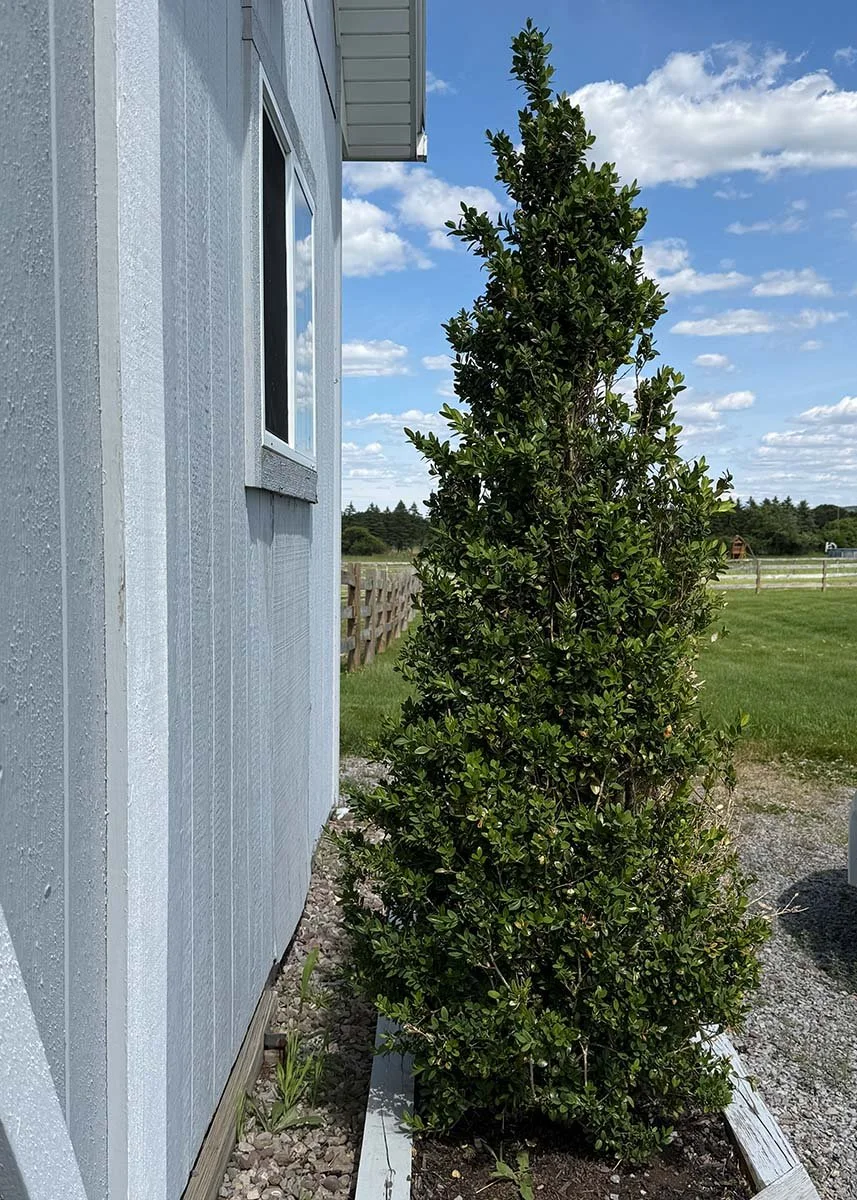
Typically densely packed with small, smooth, ovular green leaves and pruned to various shapes (commonly as spires or round balls) if your boxwoods are showing yellowing or browning leaves, white webbing, or blistered foliage, they are likely under attack. Two prolific pests are predictably responsible for the rapid decline of these common shrubs: the Box Tree Moth and the Boxwood Leafminer.
Left untreated, these pests can completely defoliate and kill your boxwoods. Learn how to identify the signs and how our ISA Certified Arborists® can help manage these pests.
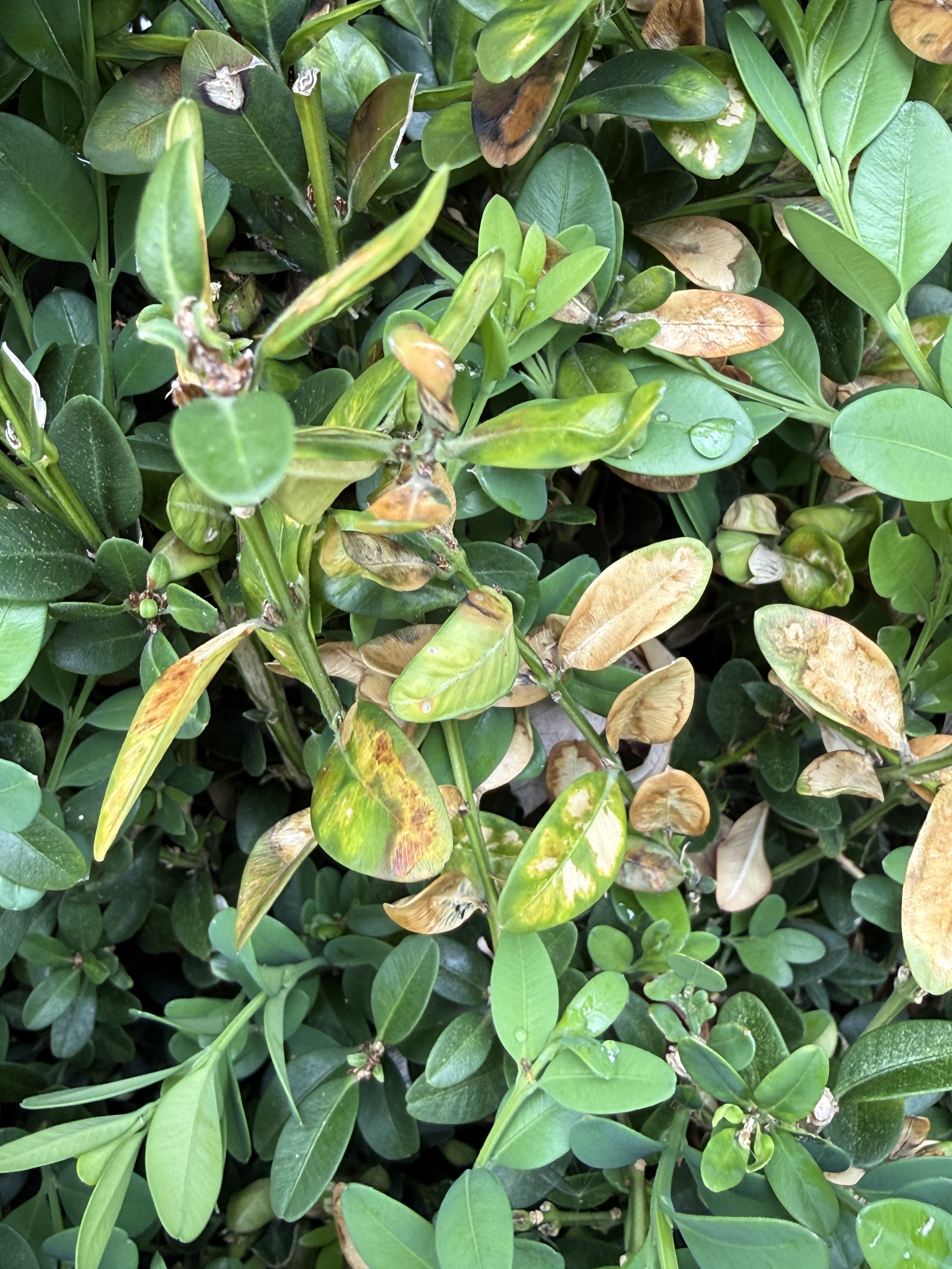

The Boxwood Leafminer (Monarthropalpus flavus)
Quick Indicators of Boxwood Leafminer Damage:
Leaf Blistering: Distinct, swollen, or puckered discolored pockets on the leaf surface.
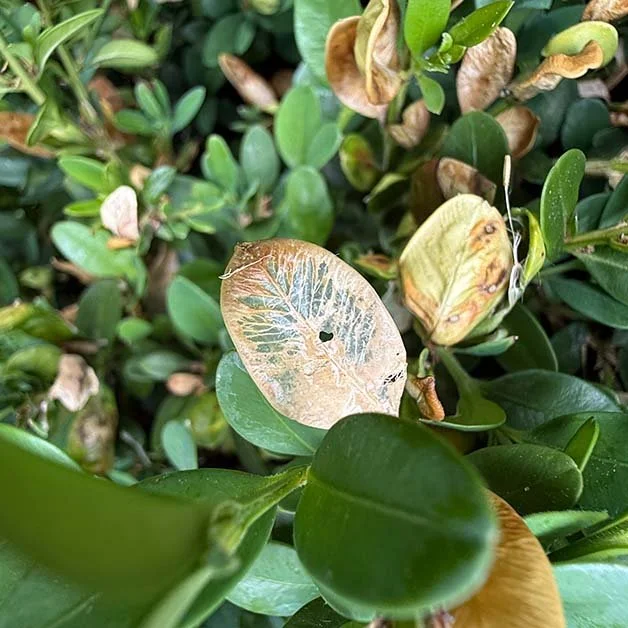
Translucent Windowpanes: Thin, clear spots visible on the undersides of the leaves where larvae have chewed through inner layers.
Pinprick Emergence Holes: Tiny, distinct holes where adults have chewed their way out of the leaf.
Late Spring Swarming: A cloud of tiny, orange, gnat-like bugs hovering around the outer canopy of your shrubs.
Boxwood Leafminer is a destructive gall midge. Unlike the moth, the damage caused by this pest happens entirely from the inside out. The larvae overwinter inside the leaf tissue. Once spring temperatures rise, they become highly active, rapidly feeding on the inner green layers of the leaf where they are encased.
The Boxwood (Box Tree) Moth (Cydalima perspectalis)
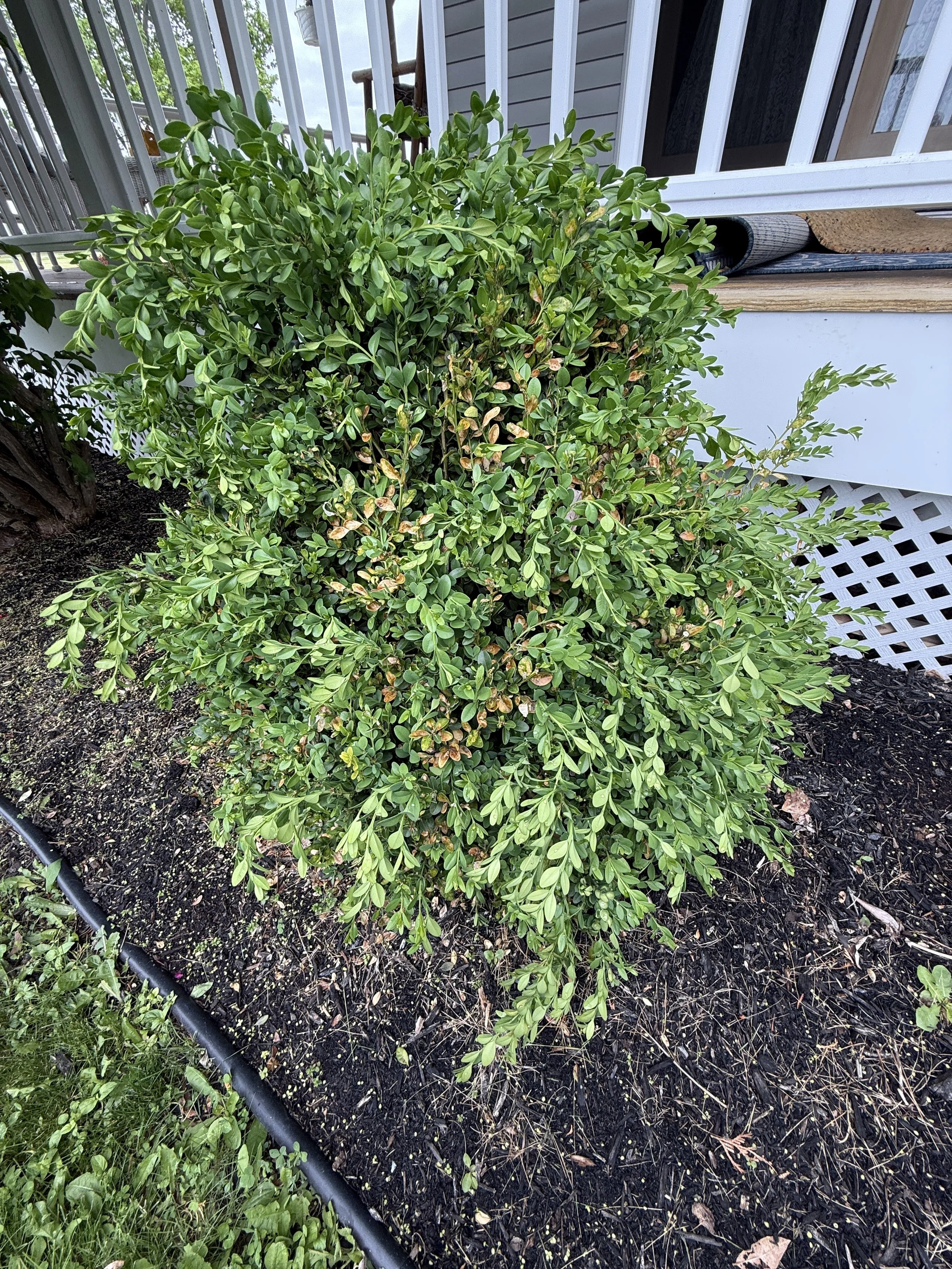
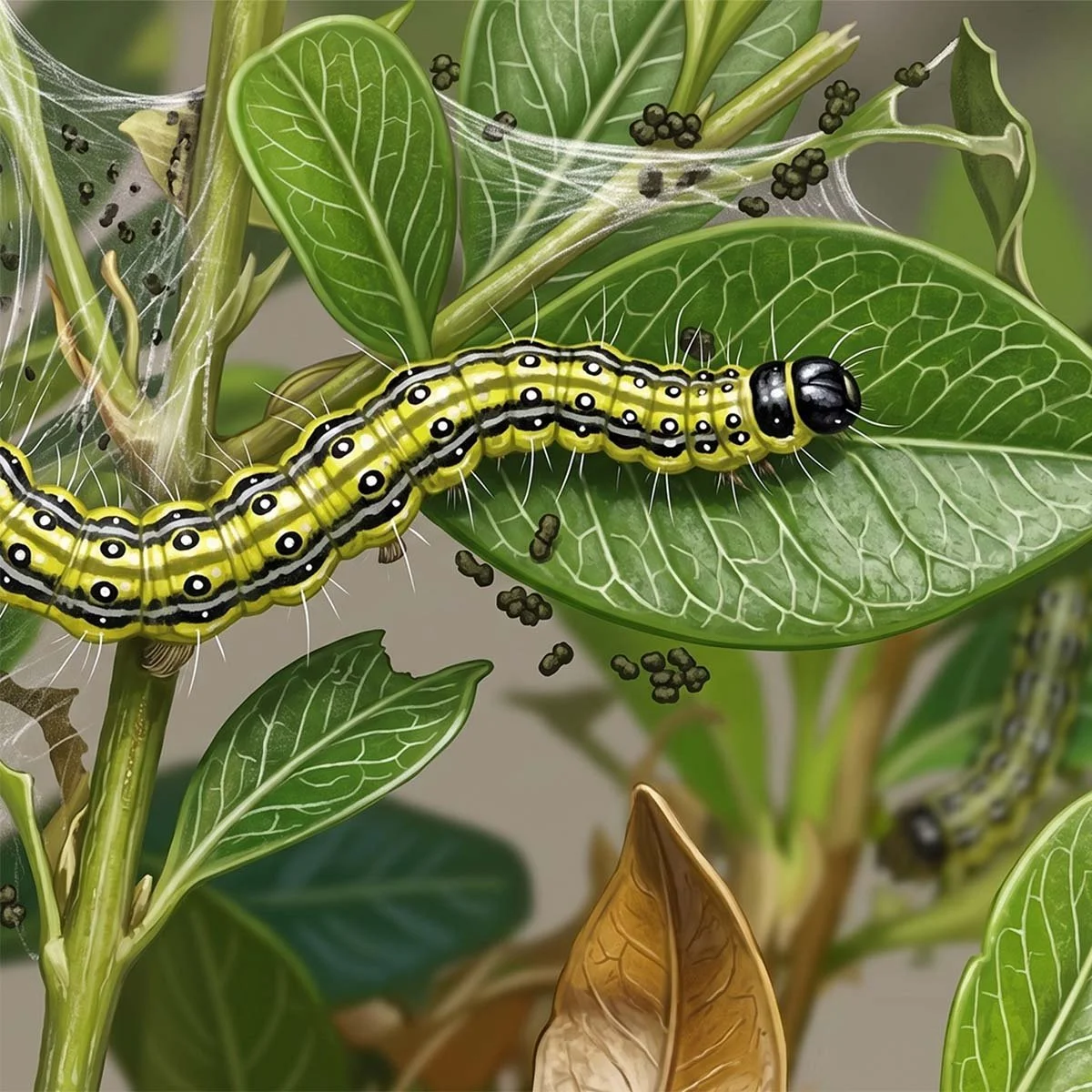
Box Tree Moth is an aggressive, invasive pest native to East Asia. First detected in New York State in 2021, its ravenous caterpillars skeletonize boxwood leaves and can defoliate shrubs at an alarming rate. Because it is a relatively new threat to the region, local boxwoods have no natural defense against it.
Quick Indicators of Box Tree Moth Damage:
Skeletonized Leaves: Caterpillars eat away the green tissue, leaving straw-like leaf skeletons.
Silky White Webbing: Dense, spider-like webbing woven deep within the interior foliage.
Frass in the Webbing: Tiny, distinct pellets of green-black caterpillar droppings caught in the white silk.
The Caterpillars: Active, lime-green caterpillars striped with black and dotted with white spots.
Adult Moths: Medium-sized moths featuring striking white wings outlined by a dark-brown margin.
What is Boxwood Blight? And should you worry.
Boxwood blight, (Cylindrocladium buxicola) is a highly destructive fungal disease that can effect all types of boxwoods. It thrives in warm, humid weather. We have not encountered this in Western NY, Rochester or the Finger Lakes. We, along with Cornell Cooperative Extension and other ISA Certified Arborists®, continue to monitor for this fungus.
Notice Signs of Shrub Decline?
Don't wait until your boxwoods completely defoliate. Contact our local team today for an on-site evaluation.

Protecting your landscape requires timely, targeted intervention. Effective plant health care (PHC) depends on the season, the lifecycle of the insect, and the severity of the infestation.
Our ISA Certified Arborists® and plant health care specialists are experts in regional invasive species and sustainable Integrated Pest Management (IPM). We will diagnose your boxwood health issues and discuss the best treatment specific to your shrubs with consideration for environmentally responsible treatment protocols promote the vigor and vitality of your shrubs. Contact us today for an on-site assessment.
Professional Boxwood Pest Treatments in Western NY & the Finger Lakes
Need assistance?
Contact our team of professional Arborists to get additional information and request a quote: